AI video dubbing is the automated process of translating a video's spoken dialogue and generating a matching voice track in another language. It allows teams to localize content instantly without hiring voice actors or booking recording studios.
Unlike simple voiceovers that play audio on top of the original track, AI dubbing replaces the speech layer while keeping background sounds and the viewing experience intact.
Audiences often engage more naturally with content delivered in their native language. Subtitles require viewers to divide attention between reading text and watching visual content. For training videos, product demonstrations, and educational content, this often reduces comprehension and engagement.
This makes AI dubbing especially useful for content where viewers need to follow the visuals, understand spoken instructions, or build a strong connection with the speaker.
Research has consistently shown that language barriers can reduce comprehension, engagement, and knowledge retention in workplace learning environments.
For organizations delivering global training, providing content in employees' preferred languages can make training easier to understand and follow. Dubbing is particularly useful for YouTube localization, SaaS product demos, corporate training, and global marketing content.
AI voiceovers typically play translated narration over the original audio or replace narration entirely. AI dubbing aims to recreate the original viewing experience by matching speakers, preserving vocal identity, and synchronizing translated speech with on-screen content.
Voiceovers work well for presentations, explainers, and other content where narration is the main focus. Dubbing is better suited to content where the original dialogue, speaker identity, and viewing experience need to remain closely aligned across languages.
Traditional localization often requires separate translators, voice actors, audio engineers, and project managers. This creates long production delays and drives up costs across every new market you enter.
AI dubbing combines transcription, translation, voice generation, and export into a single streamlined workflow. Switching to an AI-driven approach delivers concrete business advantages:
A typical AI dubbing workflow combines speech recognition, translation, speaker analysis, voice generation, and audio timing in five core technical stages:
AI dubbing software offers three main output styles depending on your production requirements and brand standards:
You select a pre-made voice from a commercial catalog. This works well for software tutorials, simple e-learning modules, and presentations where matching the original speaker's voice is not essential.
The audience hears a translated voice that closely matches the original speaker's vocal identity, tone, and speaking style. Advanced localization platforms analyze the speaker's vocal timbre, pitch, and speech cadence to generate translated audio that preserves the character and delivery of the original voice across languages.
Built for interviews, panel discussions, and corporate town halls. The software automatically detects and maps distinct voice profiles to different participants, preserving conversational dynamics without manual audio re-mixing.
Understanding where AI voice dubbing excels—and where human oversight remains necessary—ensures high content quality and protects your brand reputation.
AI dubbing is ideal for:
Human localization may still be required for:
The following examples illustrate how teams can apply AI dubbing across common localization workflows:
Evaluating how AI tools compare to traditional dubbing studios helps you make informed localization decisions:
| Metric | Traditional Human Dubbing | AI Video Dubbing |
|---|---|---|
| Turnaround Time | 3 to 6 weeks per language | Often minutes to hours, depending on project size |
| Scalability | Low (Requires hiring regional actors) | High (Supports large-scale batch processing) |
| Voice Consistency | Variable (Different actors alter tone) | Highly consistent across languages |
| Audio Mixing | Manual track separation required | Often automated on modern platforms |
| Correction Speed | Requires re-booking studio and actors | Instant text-based script regeneration |
Traditional studio dubbing prices range from $500 to $3,000 per finished video hour per language, depending on actor union rates, studio time, and sound engineering fees. This makes localizing large libraries cost-prohibitive.
AI dubbing platforms typically use subscription, usage-based, or credit-based pricing models. Costs usually scale with factors such as video duration, target languages, and voice features rather than audience size.
The total cost of AI dubbing depends on:
Subscriptions typically include a fixed monthly allocation, while pay-as-you-go top-up packages allow teams to handle unexpected production spikes predictably.
In 2026, professional AI video dubbing costs between $0.37 and $2.97 per localized minute on annual subscriptions, or $0.50 to $2.97 per minute on monthly billing. Entry-level paid subscriptions start between $6.99 and $60.00 per month.
While AI dubbing software has advanced rapidly, machine output benefits from structured quality assurance. Most professional localization teams review translated scripts before publishing customer-facing content, even when using advanced AI systems.
Translation accuracy varies across language pairs. High-resource languages like Spanish, French, and German deliver consistent, natural results. Low-resource languages, heavy regional dialects, fast overlapping dialogue, or extreme background noise can degrade automated transcription accuracy.
Pairing the AI engine with regional Subject Matter Experts (SMEs) creates an efficient QA workflow. Your local team members review the generated script to verify specialized workplace terminology, adjust honorifics, and check natural phrasing before finalizing the video render.
Using AI voice cloning technology involves strict legal and data privacy responsibilities.
If you plan to clone a real person's voice, you must obtain explicit, documented consent from the speaker. Under US state Right of Publicity laws and SAG-AFTRA guidelines, an individual's vocal identity is protected property.
Enterprise platforms prioritize data security. Look for vendors that offer SOC 2 compliance, encrypt uploaded files, and explicitly confirm that your proprietary video assets will not be used to train public AI models.
Businesses publishing AI-generated or AI-manipulated audio in the EU should review the transparency requirements under Article 50 of the EU AI Act, particularly where the content qualifies as a deepfake or falls within other applicable disclosure rules.
When choosing the AI video dubbing platforms, test solutions against these operational requirements:
Setting up an automated video dubbing workflow is straightforward. Here is how to dub a video with AI using Vosko AI Dubbing:
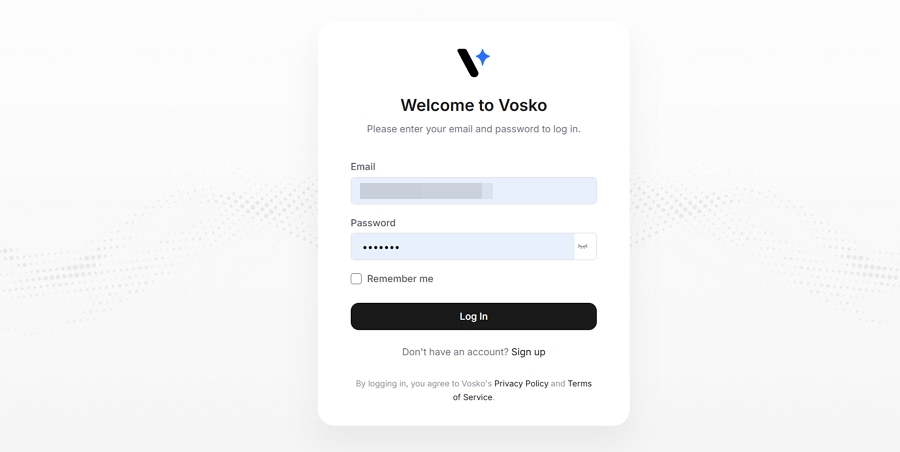
Sign up to access the dashboard. Vosko AI automatically provisions 200 free credits upon registration, allowing you to test the workflow risk-free.
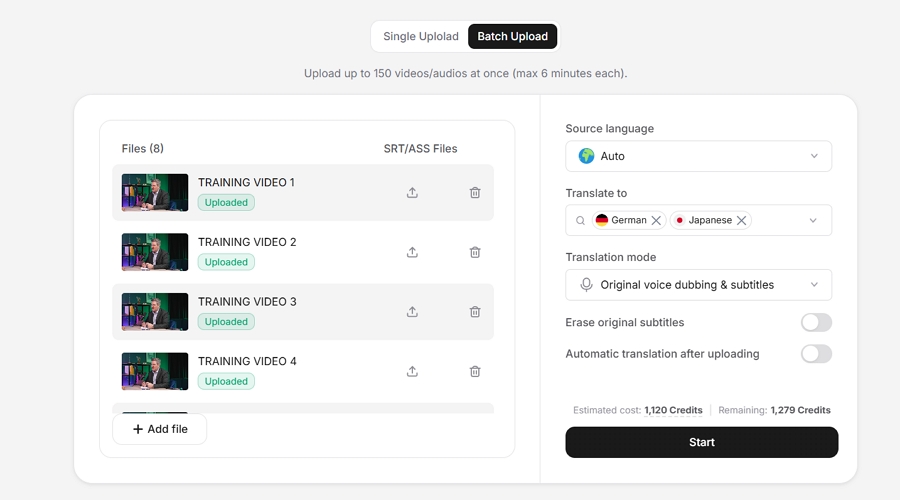
Drag and drop your media files into the batch processor. You can process multiple videos concurrently. Choose your destination languages. Vosko supports translating into up to 8 target languages at once, with voice preservation across supported languages and enhanced voice matching for selected language pairs.
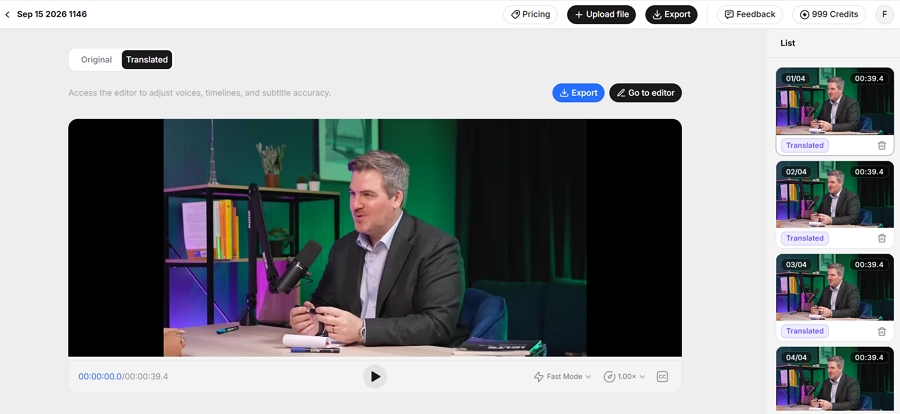
Listen to the generated audio. Use the inline script editor to adjust specific translations or workplace terms, and regenerate the audio segment in real time.
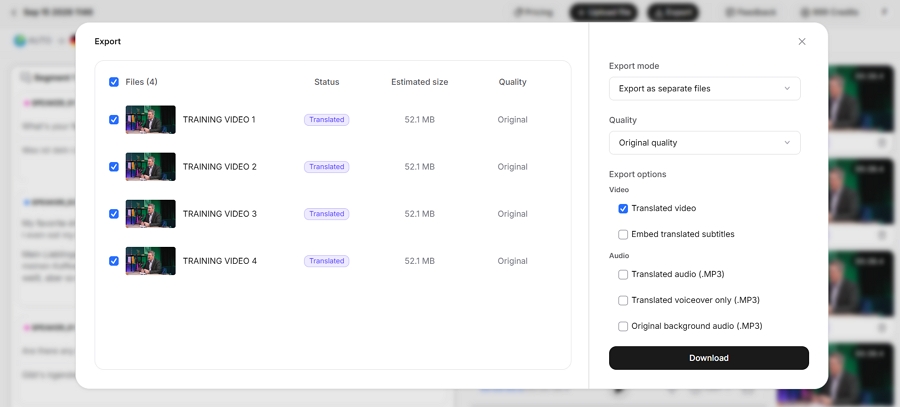
Download your localized media flexibly—as fully dubbed MP4 files, standalone audio tracks, or ADA-compliant SRT subtitles ready for your LMS or YouTube channel.
Language barriers should no longer limit your content's reach. Upgrading to an AI video dubbing workflow allows you to scale your global audience, reduce localization costs, and launch campaigns faster—all while maintaining the authentic voice and emotion your viewers trust.
Whether you are localizing corporate training videos, scaling a YouTube channel, or launching product demos in new regions, the transition is straightforward. You no longer have to choose between production speed, budget, and audio quality.
Translate your first video into 99 languages today. Start with Vosko AI Dubbing to test the workflow and experience production-ready AI localization in minutes.
What is AI video dubbing in simple terms?
It is a software process that removes the original spoken voice from a video, translates the words, and generates a new, natural-sounding voice track in a different language, all while keeping the background music and sound effects intact.
How long does AI video dubbing take?
Most projects are processed within minutes. Total processing time depends on video length, speaker count, target languages, and export settings.
Is AI video dubbing better than traditional dubbing for large content libraries?
For organizations managing hundreds of videos, AI dubbing offers significantly faster turnaround times and lower localization costs. Traditional studio recording may still be preferred for premium entertainment content that requires extensive creative direction.
Can AI dubbing work with multiple speakers?
Yes. Many AI dubbing systems can identify and separate multiple speakers, then assign different voice profiles to each participant. Accuracy depends on recording quality, speaker overlap, and how clearly each voice can be distinguished.
Can AI dubbing preserve the original speaker's voice?
Yes. Advanced AI dubbing tools analyze the original speaker's pitch, vocal identity, and speech pattern to generate a translated voice track that closely matches their unique vocal style in another language.
How does AI video dubbing translate speech and match speaker lips?
The software transcribes audio to text, translates it into the target language, and synthesizes new speech. It uses dynamic time-stretching to match the audio timing with original video cuts. Advanced systems also adjust on-screen lip movements to match phonetic sounds.
Is AI dubbing better than subtitles for YouTube videos?
Dubbing can be a better fit when viewers need to focus on the visuals rather than read subtitles. It can also make localized content feel more natural and accessible to audiences who prefer consuming content in their native language.
Can AI dubbing legally clone someone's voice without permission?
No. Cloning a real person's voice without explicit, documented consent violates privacy laws, right of publicity rules, and software terms of service. Always secure written permission before cloning any speaker's voice.
How accurate is AI video dubbing across different languages and accents?
Accuracy is high for major languages like Spanish, German, and French. Complex dialects, heavy background noise, or overlapping speech can impact transcription quality, which is why built-in script editing tools are essential for human review.
What should creators check before choosing an AI dubbing platform?
Creators should verify that the platform supports concurrent batch processing, automatically preserves background audio, offers precise voice matching, and includes an inline script editor for fast quality checks before export.